School and parents
Understand parental responsibilities for children and school involvement.
All knowledge points: Responsibility of Parents · Working Together with the School · Help with Parenting and Concerns at Home
Sources checked on
Beta version: the content and translations are still being reviewed. Check official sources before making decisions about your exam.
Responsibility of Parents
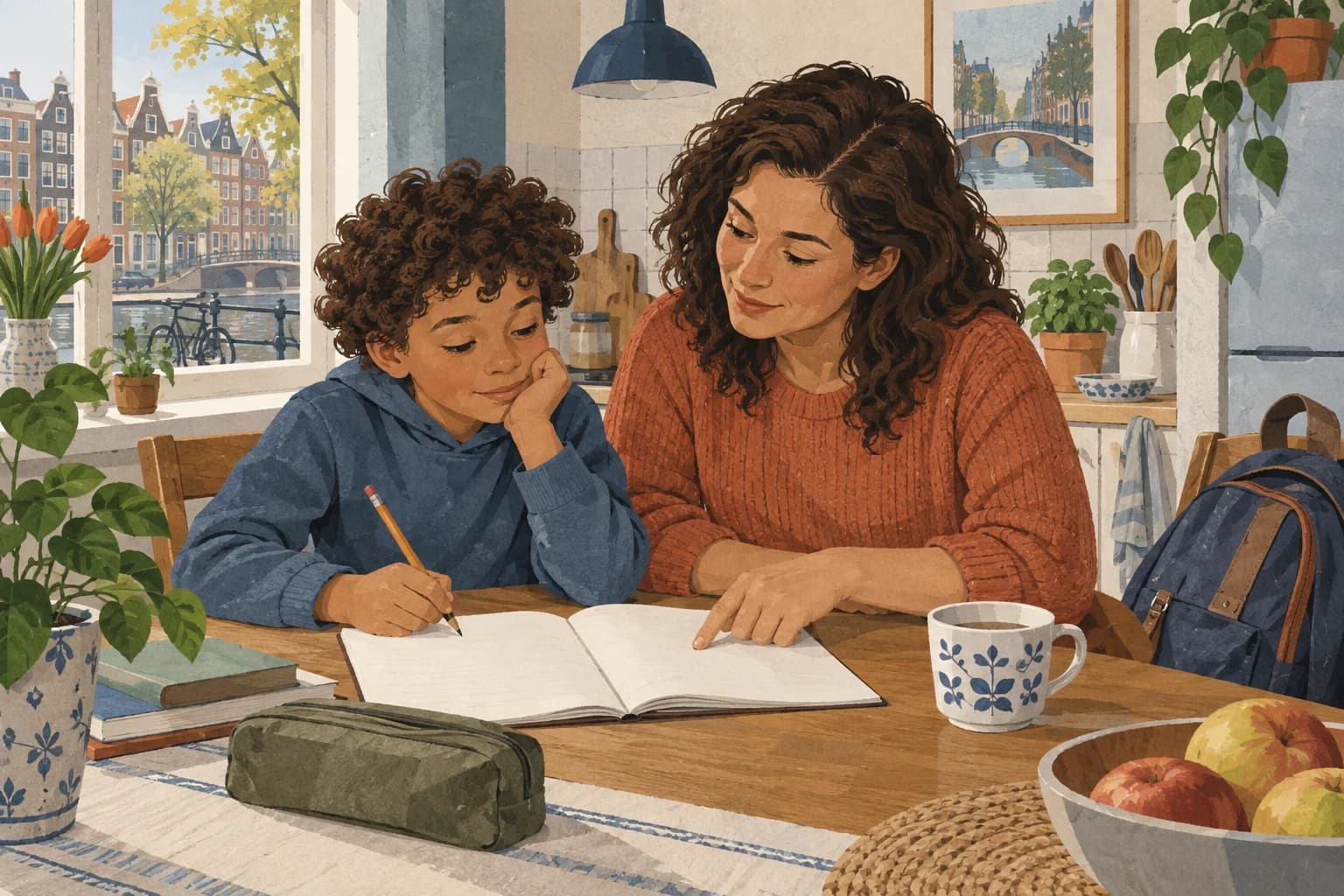
Parents or guardians have legal duties regarding the care and upbringing of a child. They make sure, for example, that a child can go to school and help the child grow up safely.
If a child causes damage, liability depends on age and situation. If a child is under 14, parents with parental authority are usually liable. If a child is 14 or 15, it depends on whether the parents could have prevented the damage; from 16 years old, the child is generally liable.
Do not draw quick conclusions based only on age. If there is a real claim for damages, ask for legal advice or information from your insurer. Discuss with your child how to prevent causing damage.
Check your understanding
Are parents always liable for damage caused by their child in the same way? Show answer
No, the rules depend on age and situation.
For ages 14 or 15 the assessment is different compared to a child under 14.
Three children aged 13, 15, and 16 each cause damage. Are their parents equally liable in all three cases? Show answer
No. At 13, parents with authority are usually liable. At 15, it depends on whether they could have prevented the damage. From 16, the child is generally liable.
Age and circumstances matter; for a real claim ask for legal advice or information from your insurer.
Sources: zoek.officielebekendmakingen.nl · stcrt 2024 15802.html · rijksoverheid.nl · rechten plichten ouderlijk gezag
Original Dutch text
Verantwoordelijkheid van ouders
Ouders of verzorgers hebben wettelijke taken bij de zorg en opvoeding van een kind. Zij zorgen bijvoorbeeld dat een kind naar school kan en helpen het kind veilig opgroeien.
Veroorzaakt een kind schade, dan hangt aansprakelijkheid af van de leeftijd en situatie. Bij een kind jonger dan 14 zijn ouders met gezag meestal aansprakelijk. Bij 14 of 15 jaar hangt het ervan af of ouders de schade hadden kunnen voorkomen; vanaf 16 jaar is het kind in beginsel zelf aansprakelijk.
Maak geen snelle conclusie uit alleen de leeftijd. Vraag bij een echte schadeclaim juridisch advies of informatie aan je verzekeraar. Bespreek met je kind hoe schade voorkomen kan worden.
Controleer wat je weet
Zijn ouders altijd op dezelfde manier aansprakelijk voor schade door hun kind? Toon antwoord
Nee, de regels hangen af van leeftijd en situatie.
Bij 14 of 15 jaar is de beoordeling anders dan bij een kind jonger dan 14.
Drie kinderen van 13, 15 en 16 jaar veroorzaken ieder schade. Zijn hun ouders in alle drie de situaties op dezelfde manier aansprakelijk? Toon antwoord
Nee. Bij 13 jaar zijn ouders met gezag meestal aansprakelijk. Bij 15 jaar hangt het ervan af of zij de schade hadden kunnen voorkomen. Vanaf 16 jaar is het kind in beginsel zelf aansprakelijk.
Leeftijd en omstandigheden tellen mee; vraag bij een echte claim juridisch advies of informatie aan je verzekeraar.
Working Together with the School
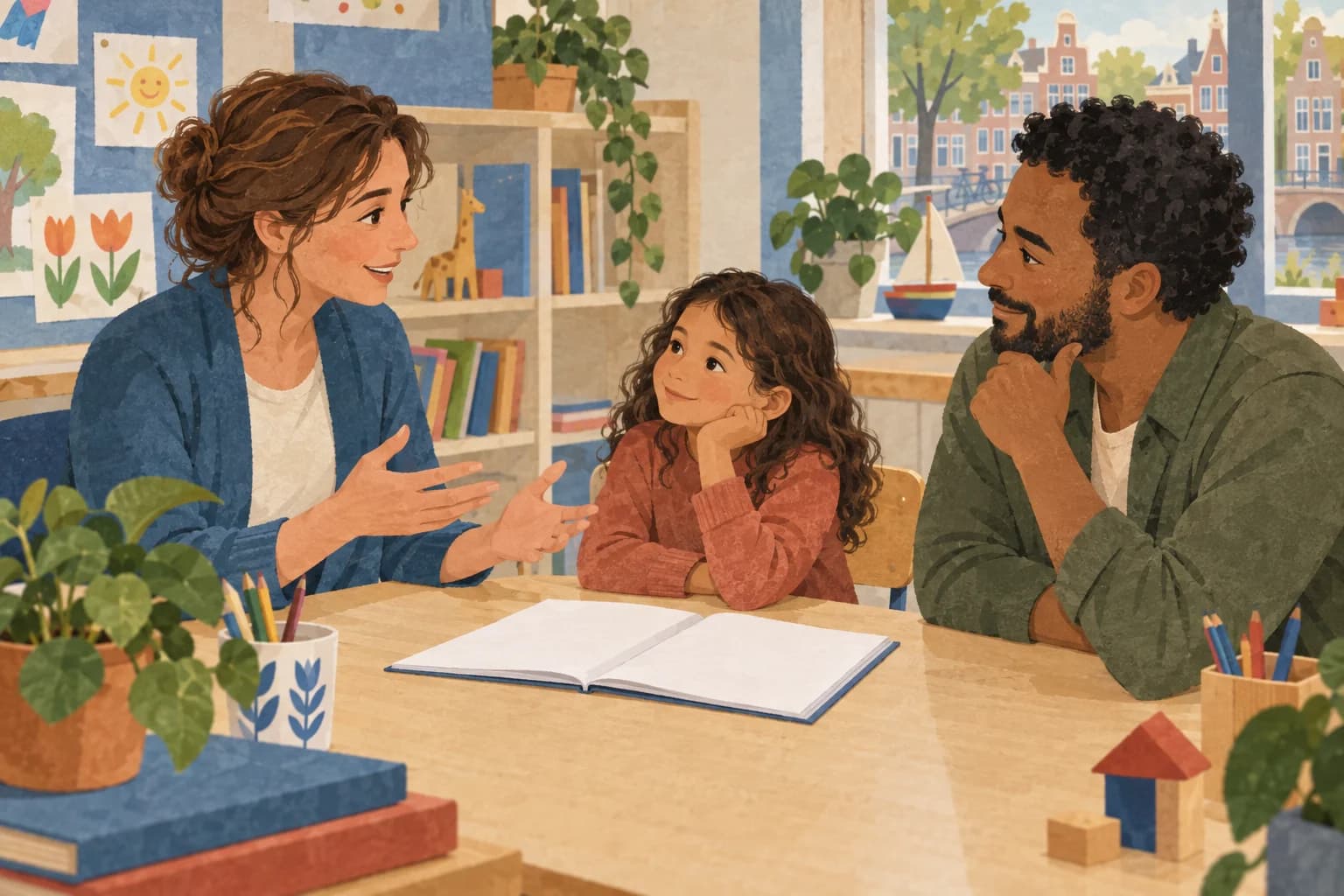
A school discusses with parents how a child learns and develops. This happens, for example, in parent meetings. Parents can say what they see at home and ask questions about the education.
Read messages from the school and write down any appointments. If you cannot follow a conversation well, ask for a clear explanation or language help. A good conversation looks at what the child needs.
Sometimes a school asks parents to voluntarily help with activities. This is something different from the legal obligation to make sure your child attends school. Ask what is expected of you and say what you can do.
Check your understanding
Why are there parent meetings at school? Show answer
To discuss the development of a child.
Parents can ask questions and share what they observe at home.
You do not fully understand a parent meeting. What can you ask for and how do you prepare? Show answer
Ask for a clear explanation or language help and write down your questions about your child’s development.
Parental involvement helps school and parents to work together.
The school asks if you can help with an activity on a voluntary basis. Must you always say yes? Show answer
No. Ask what is needed and say what you can do.
Voluntary help is different from your duty to make sure your child goes to school.
Sources: zoek.officielebekendmakingen.nl · stcrt 2024 15802.html · rijksoverheid.nl · hoe kan ik als ouder bij de school betrokken zijn
Original Dutch text
Samenwerken met de school
Een school bespreekt met ouders hoe een kind leert en zich ontwikkelt. Dat gebeurt bijvoorbeeld in oudergesprekken. Ouders kunnen vertellen wat zij thuis zien en vragen stellen over het onderwijs.
Lees berichten van school en noteer afspraken. Als je een gesprek niet goed kunt volgen, vraag om een duidelijke uitleg of taalhulp. Een goed gesprek gaat over wat het kind nodig heeft.
Soms vraagt een school ouders om vrijwillig te helpen bij activiteiten. Dat is iets anders dan de wettelijke plicht om je kind onderwijs te laten volgen. Vraag wat van je wordt verwacht en geef aan wat je kunt doen.
Controleer wat je weet
Waarom zijn er oudergesprekken op school? Toon antwoord
Om de ontwikkeling van een kind te bespreken.
Ouders kunnen vragen stellen en vertellen wat zij thuis zien.
Je begrijpt een oudergesprek niet goed. Wat kun je vragen en wat bereid je voor? Toon antwoord
Vraag duidelijke uitleg of taalhulp en schrijf vragen over de ontwikkeling van je kind op.
Ouderbetrokkenheid helpt school en ouders samen te werken.
De school vraagt of je vrijwillig bij een activiteit helpt. Moet je altijd ja zeggen? Toon antwoord
Nee. Vraag wat nodig is en geef aan wat je kunt doen.
Vrijwillig helpen is iets anders dan de plicht je kind onderwijs te laten volgen.
Help with Parenting and Concerns at Home
If you have questions about parenting, you can talk to the school, general practitioner (GP), municipality, or youth care. Support may also be possible for problems at home or at school. You do not have to wait until a problem becomes serious.
Explain what is happening, what you have already tried, and what help you are looking for. A support worker can think along with you or explain which organisation fits best.
If there are serious concerns about the safety or development of a child, child protection may get involved. For far-reaching measures, a judge is often required. In a specific situation, ask for information about your rights and the procedure.
Check your understanding
Where can a parent start with a parenting question? Show answer
With the school, GP, municipality or youth care.
Ask for support early if something is not going well.
You are worried about problems at home and at school. Where do you start and what do you explain? Show answer
Talk to the school, GP, municipality or youth care; explain what is happening and what you have already tried.
Seeking help early can prevent problems from becoming larger.
There are serious concerns about a child's safety. Can child protection be involved? Show answer
Yes. In a specific situation, ask for information about the procedure and your rights.
A judge is often involved in far-reaching measures.
Sources: zoek.officielebekendmakingen.nl · stcrt 2024 15802.html · rijksoverheid.nl · hulp vinden voor kind 4 18 jaar
Original Dutch text
Hulp bij opvoeding en zorgen thuis
Bij vragen over opvoeding kun je met school, huisarts, gemeente of jeugdhulp praten. Ook bij problemen thuis of op school kan steun mogelijk zijn. Je hoeft niet te wachten tot een probleem groot is.
Vertel wat er gebeurt, wat al geprobeerd is en welke hulp je zoekt. Een hulpverlener kan met je meedenken of uitleggen welke organisatie beter past.
Als er ernstige zorgen zijn over de veiligheid of ontwikkeling van een kind, kan kinderbescherming betrokken raken. Voor ingrijpende maatregelen is vaak een rechter nodig. Vraag bij een concrete situatie om uitleg over je rechten en de procedure.
Controleer wat je weet
Waar kan een ouder beginnen met een opvoedvraag? Toon antwoord
Bij school, huisarts, gemeente of jeugdhulp.
Vraag vroeg om ondersteuning als iets niet goed gaat.
Je maakt je zorgen over problemen thuis en op school. Waar begin je en wat vertel je? Toon antwoord
Praat met school, huisarts, gemeente of jeugdhulp; vertel wat er gebeurt en wat je al probeerde.
Vroeg hulp zoeken kan voorkomen dat problemen groter worden.
Er zijn ernstige zorgen over de veiligheid van een kind. Kan kinderbescherming betrokken raken? Toon antwoord
Ja. Vraag in een concrete situatie uitleg over de procedure en je rechten.
Voor ingrijpende maatregelen speelt vaak de rechter een rol.