School and parents · Understand parental responsibilities for children and school involvement.
Responsibility of Parents
Sources checked on
Beta version: the content and translations are still being reviewed. Check official sources before making decisions about your exam.
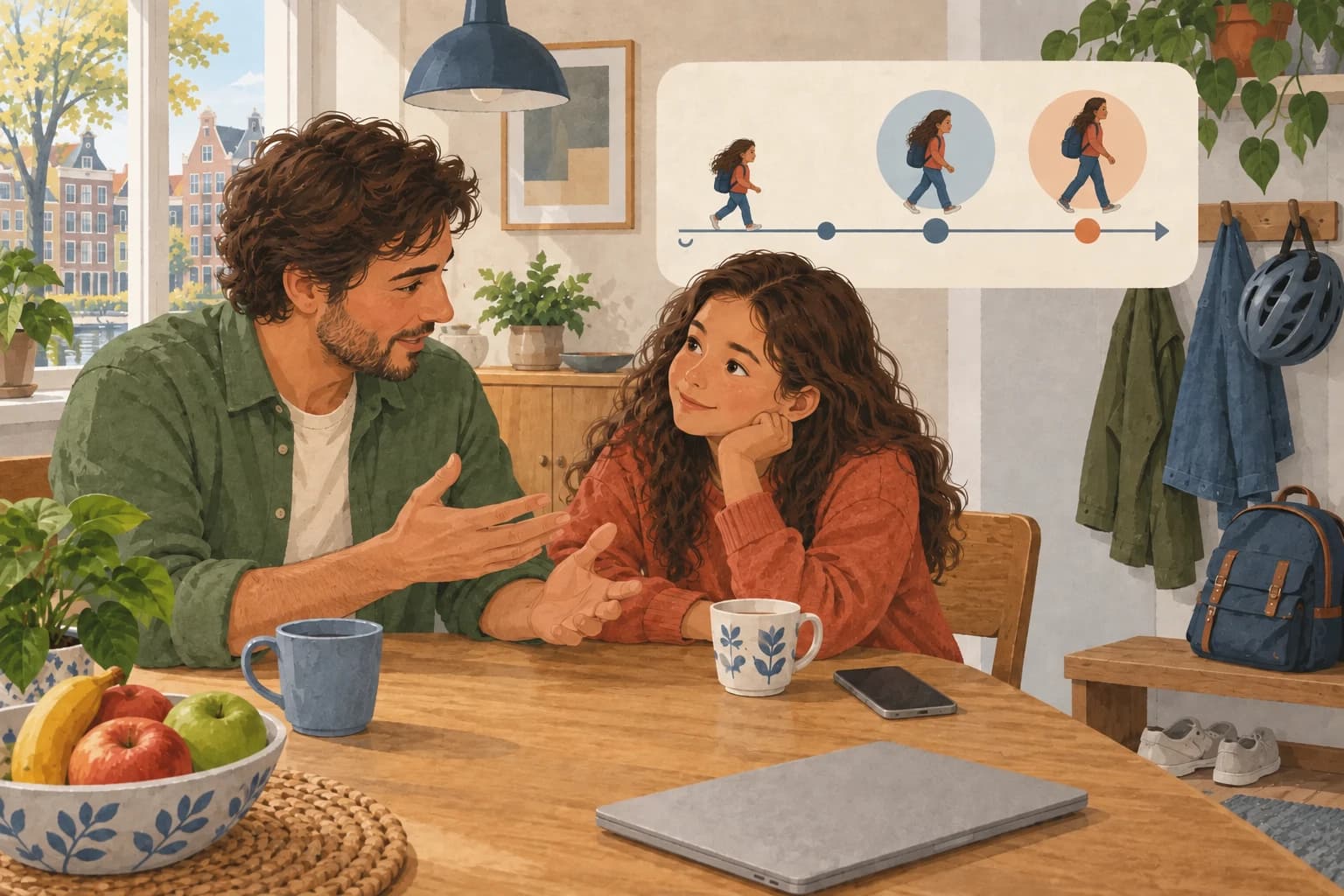
Parents or carers have responsibilities for the care and upbringing of a child. They are responsible for ensuring the child's safety, daily care, and the opportunity to attend school. 'Ouderlijk gezag' (parental authority) means the legal responsibility for making important decisions about a minor. Not every adult who looks after a child automatically has the same legal status. If you are unsure, find out what agreements and rules apply in your individual situation.
Children gradually learn to make their own decisions. Parents guide them and set boundaries suitable for the child's age. School, general practitioner (GP), and youth support services can give advice if a family has questions. Asking for help does not mean you have failed as a parent; it can help you to recognise a problem early and support your child better.
If a child causes damage, the question of who is liable may arise. For children younger than 14, parents with authority are usually liable. A child aged 14 or 15 is personally liable. However, a parent or guardian is also liable if they could reasonably have prevented the child from causing the damage but did not do so. From the age of 16, the young person is generally personally liable. These are general principles; in every case, the specific circumstances are important.
If you face a damage claim, keep the letter, any photographs, and other evidence. Report the situation to your liability insurance company if necessary, and seek legal advice before you promise to pay any amount. Also discuss with your child what happened and how to prevent similar damage in the future. Responsibility is not only about paying for damage, but also about learning and making amends.
Check your understanding
Are parents always liable for damage caused by their child in the same way? Show answer
No, the rules depend on the age and the situation.
If the child is 14 or 15, the assessment is different from a child younger than 14.
Three children aged 13, 15, and 16 each cause damage. Are the parents liable in the same way in all three situations? Show answer
No. For a 13-year-old, parents with authority are usually liable. For a 15-year-old, liability depends on whether the parent could have prevented the damage. From age 16, the young person is generally liable themselves.
Both age and situation matter; consult a lawyer or your insurer if you receive a real claim.
What does 'ouderlijk gezag' mean? Show answer
The legal responsibility for making important decisions about a minor.
Not every adult who looks after a child automatically has legal authority.
A parent has questions about their child's development. Who can they ask for advice? Show answer
For example, the school, GP, or youth support services.
Parents do not have to deal with parenting questions alone; asking for help can clarify things early.
Sources: zoek.officielebekendmakingen.nl · stcrt 2024 15802.html · rijksoverheid.nl · rechten plichten ouderlijk gezag · rijksoverheid.nl · schulden van kinderen
Original Dutch text
Verantwoordelijkheid van ouders
Ouders of verzorgers hebben taken bij de zorg en opvoeding van een kind. Zij zorgen voor veiligheid, dagelijkse verzorging en de mogelijkheid om onderwijs te volgen. Ouderlijk gezag is de juridische verantwoordelijkheid voor belangrijke beslissingen over een minderjarig kind. Niet iedere volwassene die voor een kind zorgt, heeft automatisch dezelfde juridische positie; vraag bij twijfel welke afspraken en regels gelden.
Kinderen leren gaandeweg zelf keuzes maken. Ouders begeleiden hen daarbij en stellen grenzen die passen bij hun leeftijd. School, huisarts en jeugdhulp kunnen advies geven als een gezin vragen heeft. Hulp vragen betekent niet dat je als ouder faalt; het kan helpen om een probleem vroeg te begrijpen en het kind beter te ondersteunen.
Als een kind schade veroorzaakt, kan de vraag ontstaan wie aansprakelijk is. Bij kinderen jonger dan 14 zijn ouders met gezag meestal aansprakelijk. Een kind van 14 of 15 is zelf aansprakelijk. Een ouder of voogd is daarnaast aansprakelijk als die redelijkerwijs had kunnen voorkomen dat het kind de schade veroorzaakte, maar dat niet deed. Vanaf 16 jaar is de jongere in beginsel zelf aansprakelijk. Dat zijn algemene uitgangspunten; de omstandigheden van een concreet geval tellen mee.
Bewaar bij een schadeclaim de brief, foto’s en andere feiten. Meld de situatie zo nodig bij je aansprakelijkheidsverzekeraar en vraag juridisch advies voordat je een bedrag toezegt. Bespreek met je kind ook wat er gebeurde en hoe schade voortaan voorkomen kan worden. Zo gaat verantwoordelijkheid niet alleen over betalen, maar ook over leren en herstellen.
Controleer wat je weet
Zijn ouders altijd op dezelfde manier aansprakelijk voor schade door hun kind? Toon antwoord
Nee, de regels hangen af van leeftijd en situatie.
Bij 14 of 15 jaar is de beoordeling anders dan bij een kind jonger dan 14.
Drie kinderen van 13, 15 en 16 jaar veroorzaken ieder schade. Zijn hun ouders in alle drie de situaties op dezelfde manier aansprakelijk? Toon antwoord
Nee. Bij 13 jaar zijn ouders met gezag meestal aansprakelijk. Bij 15 jaar hangt het ervan af of zij de schade hadden kunnen voorkomen. Vanaf 16 jaar is het kind in beginsel zelf aansprakelijk.
Leeftijd en omstandigheden tellen mee; vraag bij een echte claim juridisch advies of informatie aan je verzekeraar.
Wat betekent ouderlijk gezag? Toon antwoord
De juridische verantwoordelijkheid voor belangrijke beslissingen over een minderjarig kind.
Niet iedere volwassene die voor een kind zorgt, heeft automatisch gezag.
Een ouder heeft vragen over de ontwikkeling van een kind. Bij wie kan die advies vragen? Toon antwoord
Bijvoorbeeld bij de school, huisarts of jeugdhulp.
Ouders hoeven opvoedvragen niet alleen op te lossen; hulp vragen kan vroeg duidelijkheid geven.