School and parents · Understand parental responsibilities for children and school involvement.
Cooperating with the School
Sources checked on
Beta version: the content and translations are still being reviewed. Check official sources before making decisions about your exam.
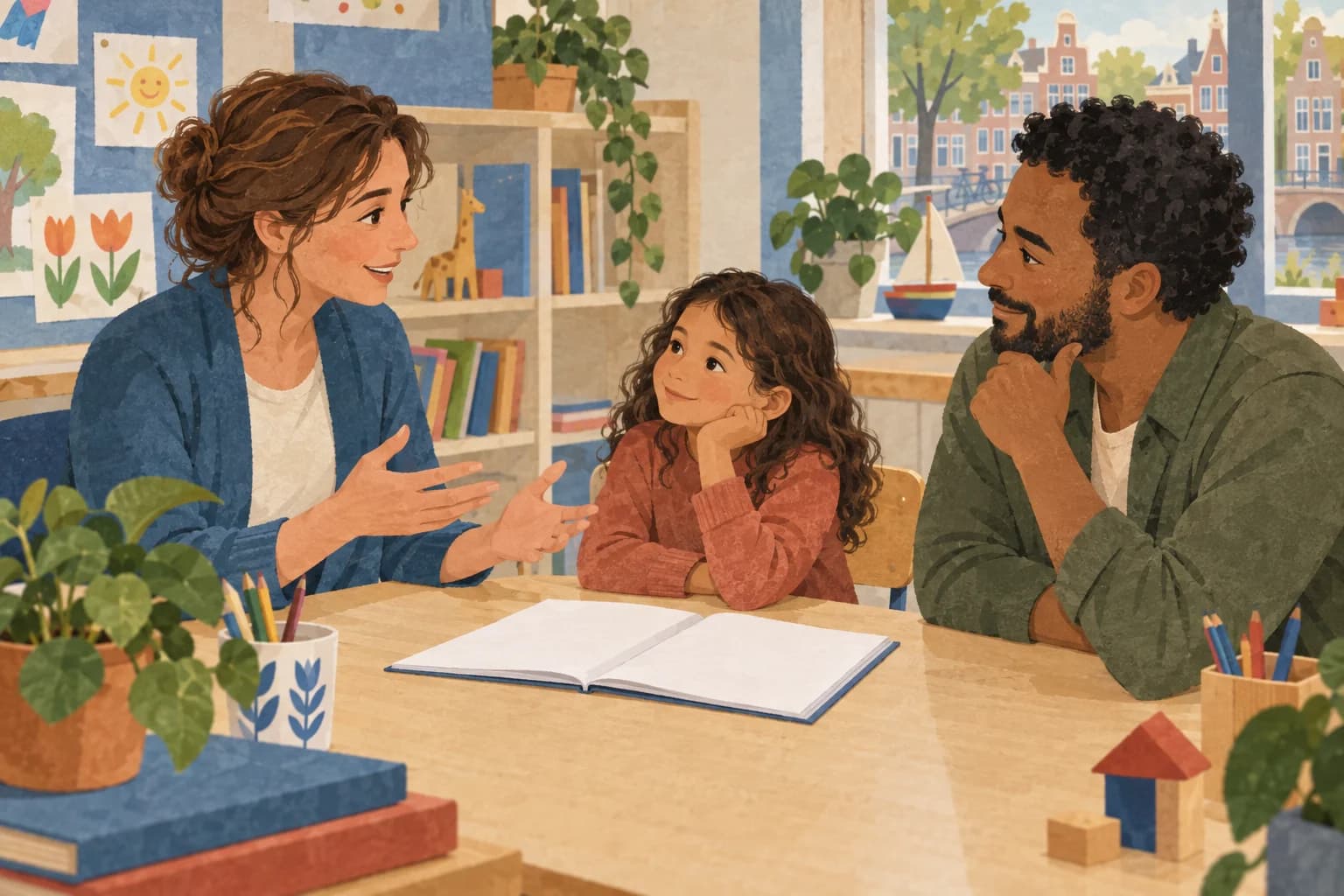
Schools and parents each know different things about a child. The teacher observes how your child learns and works together in class; parents see what happens at home. That is why parent-teacher meetings are important. You can ask about your child's development, their strengths, and what support is needed. Let the school know if something has changed at home that could affect your child's learning.
Read messages from the school and make a note of appointments, such as meetings or parent evenings. If you do not understand a message, ask the school to explain it clearly. You can also ask whether language support is available. You do not need to know every education term at a parent meeting. What matters is that you and the teacher understand what your child needs and agree what each of you will do.
Some schools ask parents to help with an activity on a voluntary basis. This can be enjoyable, but it is different from your legal responsibility to ensure your child attends school. Ask what the school expects and be honest about what you can do. Even if you cannot be present at every activity, you can stay involved by reading messages and asking questions.
Make agreements concrete: what will the school do, what can you try at home, and when will you follow up together? If a problem remains, ask about extra support or arrange to speak with the right staff member. Keep a record of important messages and reports. Calm cooperation helps your child more than making assumptions about who is responsible.
Check your understanding
Why are there parent-teacher meetings at school? Show answer
To discuss a child's development.
Parents can ask questions and share what they observe at home.
You do not understand a parent-teacher meeting well. What can you ask, and what should you prepare? Show answer
Ask for a clear explanation or language support and write down questions about your child's development.
Parental involvement helps the school and parents work together.
The school asks if you can help with an activity on a voluntary basis. Do you always have to say yes? Show answer
No. Ask what is needed and say what you are able to do.
Voluntary help is different from your duty to ensure your child attends school.
Sources: zoek.officielebekendmakingen.nl · stcrt 2024 15802.html · rijksoverheid.nl · hoe kan ik als ouder bij de school betrokken zijn
Original Dutch text
Samenwerken met de school
School en ouders weten ieder iets anders over een kind. De leraar ziet hoe het kind leert en samenwerkt in de klas; ouders zien wat er thuis gebeurt. Daarom zijn oudergesprekken belangrijk. Je kunt vragen hoe je kind zich ontwikkelt, waar het goed in is en welke steun nodig is. Vertel ook als thuis iets is veranderd dat het leren kan beïnvloeden.
Lees berichten van school en noteer afspraken, zoals een gesprek of ouderavond. Begrijp je een bericht niet, vraag de school om duidelijke uitleg. Je kunt ook vragen of taalhulp mogelijk is. Het doel van een gesprek is niet om moeilijke woorden te kennen, maar om samen te begrijpen wat het kind nodig heeft en welke stap ieder kan zetten.
Sommige scholen vragen ouders vrijwillig te helpen bij een activiteit. Dat kan prettig zijn, maar het is iets anders dan de wettelijke verantwoordelijkheid om je kind onderwijs te laten volgen. Vraag wat de school verwacht en zeg eerlijk wat je kunt doen. Ook een ouder die niet bij iedere activiteit aanwezig kan zijn, kan betrokken blijven door berichten te lezen en vragen te stellen.
Maak afspraken concreet: wat gaat de school doen, wat kun jij thuis proberen en wanneer bespreek je het opnieuw? Als een probleem blijft bestaan, vraag naar extra ondersteuning of een gesprek met de juiste medewerker. Bewaar belangrijke berichten en verslagen. Een rustige samenwerking helpt het kind meer dan aannames over wie verantwoordelijk is.
Controleer wat je weet
Waarom zijn er oudergesprekken op school? Toon antwoord
Om de ontwikkeling van een kind te bespreken.
Ouders kunnen vragen stellen en vertellen wat zij thuis zien.
Je begrijpt een oudergesprek niet goed. Wat kun je vragen en wat bereid je voor? Toon antwoord
Vraag duidelijke uitleg of taalhulp en schrijf vragen over de ontwikkeling van je kind op.
Ouderbetrokkenheid helpt school en ouders samen te werken.
De school vraagt of je vrijwillig bij een activiteit helpt. Moet je altijd ja zeggen? Toon antwoord
Nee. Vraag wat nodig is en geef aan wat je kunt doen.
Vrijwillig helpen is iets anders dan de plicht je kind onderwijs te laten volgen.