Democracy and the rule of law · Understand how Dutch democratic institutions and elections work.
Power is Divided
Sources checked on
Beta version: the content and translations are still being reviewed. Check official sources before making decisions about your exam.
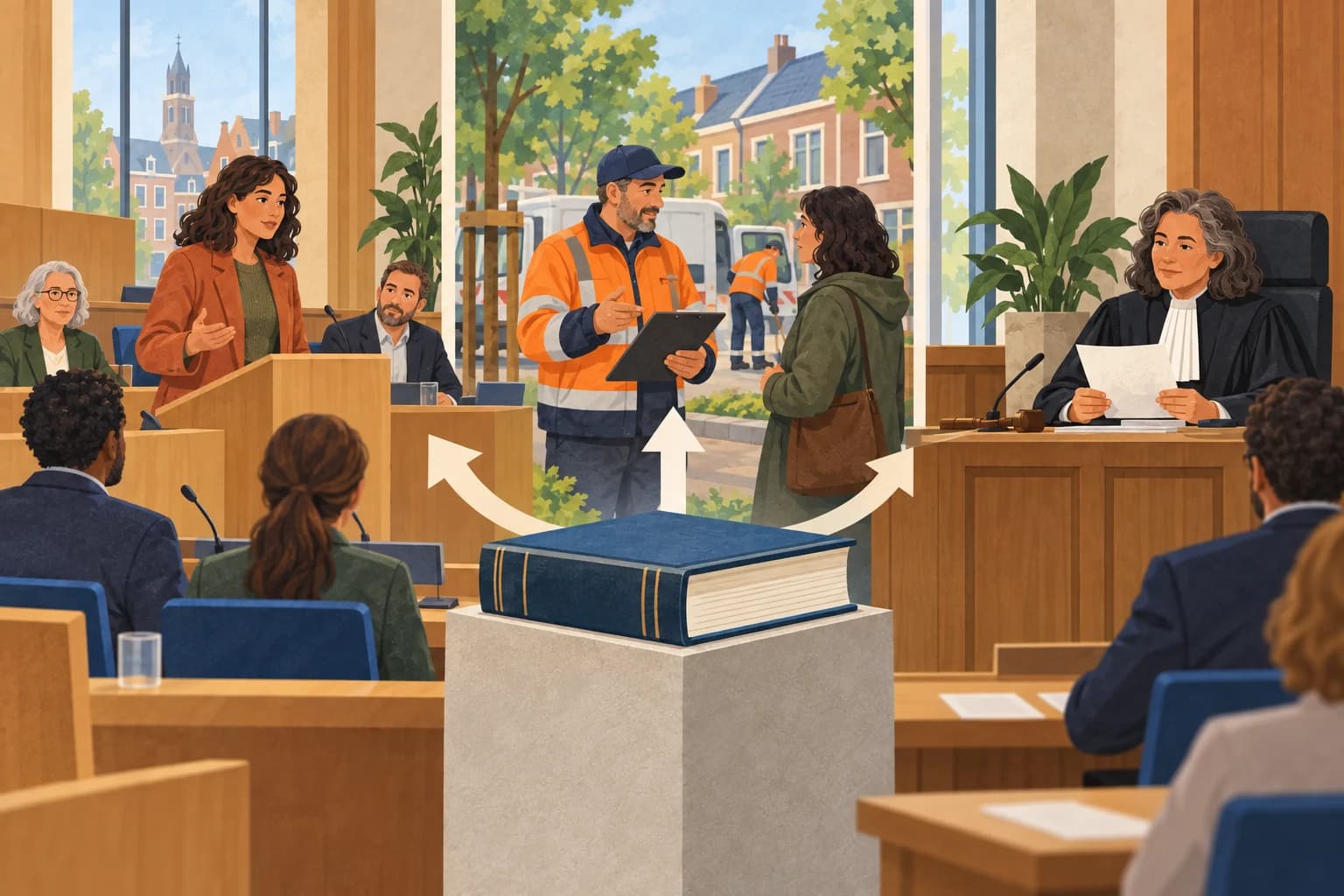
In a democratic state governed by the rule of law, power is divided. The legislative power creates laws, the executive power implements laws and decisions, and the judiciary reviews legal cases. This is often called the separation of powers (scheiding der machten). In the Netherlands, these tasks are not completely separated, but oversight ensures that no individual or organisation can make all decisions without supervision.
The government and parliament work together to create laws. In addition, parliament supervises ministers: Members of Parliament may ask questions and hold debates. Municipalities, implementing organisations, and the police apply the rules in their work. They may not simply decide on their own that a law does not apply to someone. In certain situations, citizens can have government decisions reviewed.
Judges must be able to make independent judgments. They look at the law, the facts, and the arguments from all parties involved. A judge is therefore not an employee of the police or the organisation that issued the decision. You must respect a judge’s decision, even if you are disappointed by it. Sometimes, you can appeal within a set time period. Whether this is possible depends on the specific case.
Consider a traffic rule: the law determines what is allowed, the police can supervise compliance, and a judge can resolve a dispute. These roles help you understand whom to approach with your question. If it is about a fine or a decision, read the letter carefully: it usually explains how you can respond. Seek legal advice in good time if you do not understand the procedure.
Check your understanding
Why is power divided? Show answer
So that not one person or organisation makes all decisions.
Legislative, executive, and judicial tasks keep each other in balance.
What can you sometimes do if you disagree with a court judgment? Show answer
Lodge an appeal, within the rules and time limit.
This does not work the same way in every case.
Which authority implements laws and which decides on a dispute? Show answer
The executive implements laws; the judiciary decides on disputes according to the law.
Divided power prevents one group from making all decisions.
Sources: zoek.officielebekendmakingen.nl · stcrt 2024 15802.html · rijksoverheid.nl · democratische rechtsstaat in nederland
Original Dutch text
De macht is verdeeld
In een democratische rechtsstaat is macht verdeeld. De wetgevende macht maakt wetten, de uitvoerende macht voert wetten en besluiten uit, en de rechterlijke macht beoordeelt rechtszaken. Dit wordt vaak de scheiding der machten genoemd. De taken zijn in Nederland niet volledig gescheiden, maar controle voorkomt dat één persoon of organisatie alles zonder toezicht beslist.
De regering en het parlement werken samen aan wetten. Het parlement controleert daarnaast ministers: Kamerleden kunnen vragen stellen en debatten voeren. Gemeenten, uitvoeringsorganisaties en politie passen regels in hun werk toe. Zij mogen niet zomaar zelf bepalen dat een wet voor iemand niet geldt. Burgers kunnen besluiten van de overheid in bepaalde situaties laten controleren.
Rechters moeten onafhankelijk kunnen oordelen. Zij kijken naar de wet, de feiten en de argumenten van de betrokken partijen. Een rechter is dus geen medewerker van de politie of van de organisatie die het besluit nam. Een uitspraak moet je respecteren, ook als je teleurgesteld bent. Soms kun je binnen een bepaalde termijn hoger beroep instellen. Welke mogelijkheid bestaat, hangt af van de zaak.
Neem een verkeersregel: de wet bepaalt wat is toegestaan, de politie kan toezicht houden en een rechter kan een geschil beoordelen. Die rollen helpen je te begrijpen bij wie je met een vraag terechtkunt. Gaat het om een boete of besluit, lees dan de brief: daarin staat meestal hoe je kunt reageren. Vraag tijdig juridisch advies wanneer je de procedure niet begrijpt.
Controleer wat je weet
Waarom wordt de macht verdeeld? Toon antwoord
Zodat niet één persoon of organisatie alles beslist.
Wetgevende, uitvoerende en rechterlijke taken houden elkaar in evenwicht.
Wat kun je soms doen als je het oneens bent met een rechterlijke uitspraak? Toon antwoord
Binnen de regels en termijn in hoger beroep gaan.
Dat kan niet in elke zaak op dezelfde manier.
Welke macht voert wetten uit en welke beslist over een geschil? Toon antwoord
De uitvoerende macht voert wetten uit; de rechterlijke macht beslist over geschillen volgens het recht.
Gespreide macht voorkomt dat één groep alle beslissingen neemt.