Housing and renting · Follow local rules that keep the living environment clean.
Separating Waste in Your Municipality
Sources checked on
Beta version: the content and translations are still being reviewed. Check official sources before making decisions about your exam.
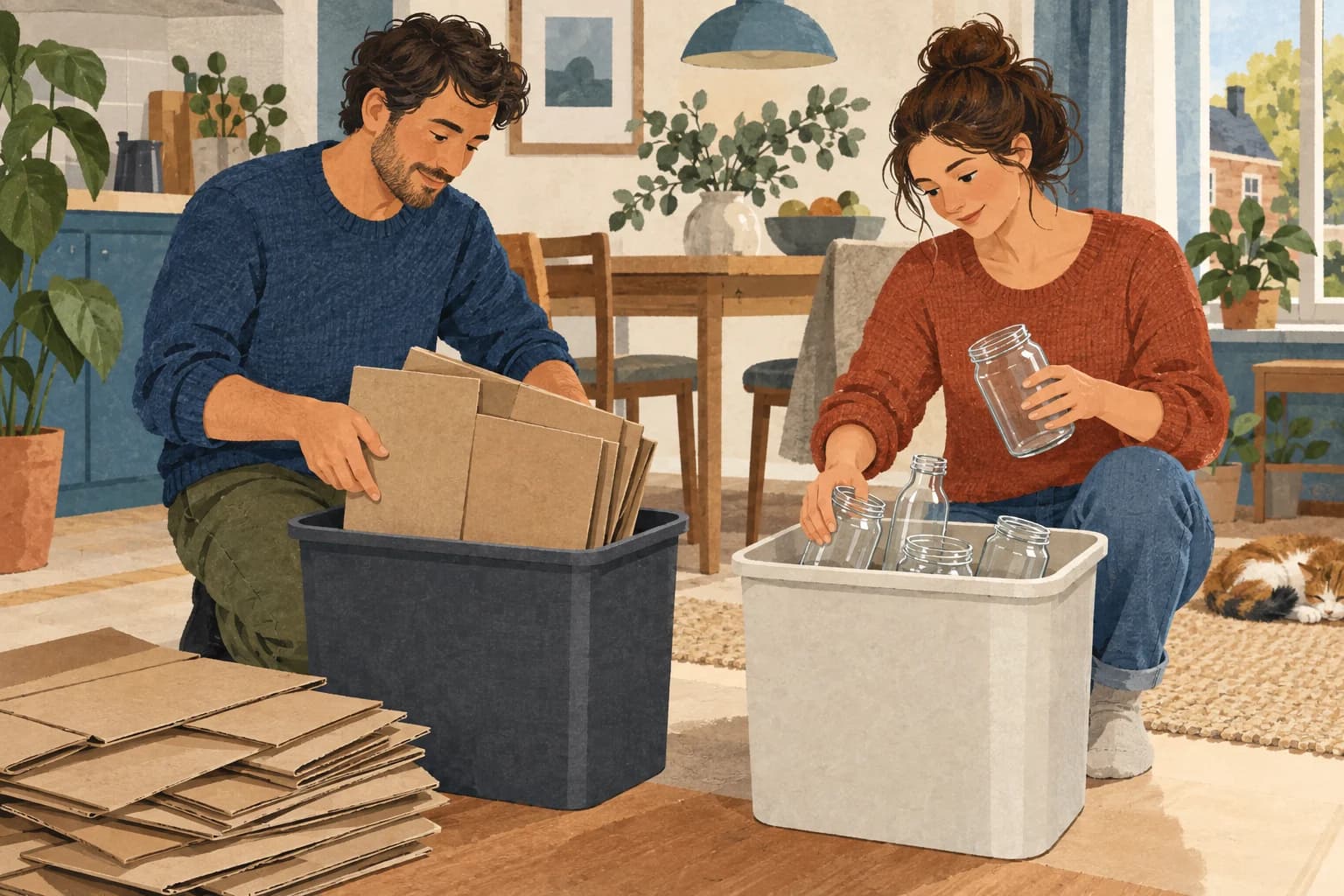
The municipality decides how household waste is collected from your address. In some places, wheelie bins are provided at your home; elsewhere, you may need to use an underground container. The rules for waste separation differ from one municipality to another. Therefore, look up the waste calendar or waste guide (afvalwijzer) for your own address.
Many municipalities collect paper, glass, plastic, and vegetable, fruit and garden waste separately. Residual waste consists of everything that does not belong in another bin. If you are unsure, consult the local waste guide. Packaging made from several materials cannot always be placed in the bin you might initially choose. For example, an empty bottle usually belongs in the glass container, while a drinking glass often does not. The local instructions help prevent such mistakes.
Batteries, medicines and electrical appliances require special attention. A broken electrical appliance generally does not go in the regular residual waste. Find out where you can hand it in; you can often take unused medicines to a pharmacy (apotheek). Large items, such as an old wardrobe, should be brought to a recycling centre (milieustraat) or arranged for collection according to the municipality's regulations. Sometimes, there is a charge for this.
Separating waste makes it possible to reuse materials and can reduce pollution. Never place a bag next to a full container, as this dirties the street and may attract vermin. Find another permitted location or report that the container is full. In this way, the neighbourhood remains clean for everyone who lives there.
Check your understanding
Where can you find the rules for separating waste at your address? Show answer
At your municipality or in the local waste guide.
The rules differ between municipalities.
You do not know where a battery or an electrical appliance should go. What should you do? Show answer
Check the waste guide or your municipality's website.
Local rules and special collection points vary.
Why do you separate waste? Show answer
So that materials can be reused and pollution can be reduced.
Sorting waste correctly helps with proper processing.
Sources: zoek.officielebekendmakingen.nl · stcrt 2024 15802.html · rijksoverheid.nl · huishoudelijk afval
Original Dutch text
Afval scheiden in jouw gemeente
De gemeente bepaalt hoe huishoudelijk afval bij jouw adres wordt opgehaald. Op sommige plaatsen staan bakken bij huis; ergens anders gebruik je een ondergrondse container. De regels voor afvalscheiding verschillen per gemeente. Zoek daarom de afvalkalender of afvalwijzer voor jouw eigen adres op.
Veel gemeenten verzamelen papier, glas, plastic en groente-, fruit- en tuinafval apart. Restafval is wat niet in een andere bak hoort. Kijk bij twijfel in de lokale afvalwijzer. Een verpakking die uit verschillende materialen bestaat, mag niet altijd in de bak die je eerst zou kiezen. Een lege fles kan bijvoorbeeld in een glasbak horen, terwijl een drinkglas daar vaak niet in mag. De lokale uitleg voorkomt zulke vergissingen.
Batterijen, medicijnen en elektrische apparaten vragen extra aandacht. Een kapot apparaat hoort meestal niet bij gewoon restafval. Vraag waar je het kunt inleveren; voor ongebruikte medicijnen kun je vaak bij een apotheek terecht. Grote spullen, zoals een oude kast, breng je naar een milieustraat of laat je ophalen volgens de regels van de gemeente. Soms kost dat geld.
Afval scheiden maakt hergebruik van materialen mogelijk en kan vervuiling verminderen. Zet geen zak naast een volle container, want dat maakt de straat vuil en kan ongedierte aantrekken. Zoek een andere toegestane plek of meld dat de container vol is. Zo blijft de buurt schoon voor iedereen die er woont.
Controleer wat je weet
Waar vind je de regels voor afval scheiden op jouw adres? Toon antwoord
Bij je gemeente of in de lokale afvalwijzer.
De regels verschillen per gemeente.
Je weet niet waar een batterij of elektrisch apparaat hoort. Wat doe je? Toon antwoord
Kijk in de afvalwijzer of op de website van jouw gemeente.
Lokale regels en speciale inzamelpunten verschillen.
Waarom scheid je afval? Toon antwoord
Zodat materialen hergebruikt kunnen worden en vervuiling kan verminderen.
De juiste scheiding helpt het afval goed te verwerken.