History and geography
Nora explores a library map, plans a train trip to The Hague and visits a history exhibition.
Sources checked on
Beta version: the content and translations are still being reviewed. Check official sources before making decisions about your exam.
What you will learn
Amsterdam is the capital of the Netherlands, while the national government is based in The Hague. Knowing your province and planning a public transport journey are part of the geography theme. The official KNM history objectives also include colonialism and enslavement, the Second World War and the Holocaust, remembrance and postwar migration. This short story does not teach all of those subjects; use the theme map below and the official terms to see the broader scope.
Contents
Dutch history, provinces, important places and public transport.
What the official theme includes
The current KNM syllabus lists these areas. Open the chapters for an explanation of each knowledge point. The short story above is a reading warm-up; check DUO for current exam information and official practice questions.
5.1Learn key parts of Dutch history and their present-day traces.
- 5.1.1
NederlandsIn de zeventiende eeuw groeiden handel en cultuur in Nederland; gebouwen en schilderijen laten daar sporen van zien. Nederland stichtte ook koloniën en maakte mensen tot slaaf, verhandelde hen en liet hen op plantages werken. Molens, polders, dijken en de Deltawerken tonen het leven met water. Herken ook de Nederlandse vlag en het volkslied, het Wilhelmus.
EnglishIn the seventeenth century, trade and culture grew in the Netherlands; buildings and paintings show traces of that time. The Netherlands also founded colonies and enslaved and traded people, forcing them to work on plantations. Windmills, polders, dikes and the Delta Works show how people live with water. Also recognise the Dutch flag and the national anthem, the Wilhelmus.
- 5.1.2
NederlandsDuitsland bezette Nederland in de Tweede Wereldoorlog. De Holocaust was de systematische vervolging en moord op Joden, onder wie veel Nederlandse Joden; antisemitisme is verboden. De bevrijding kwam in 1945, met herdenken op 4 mei en vieren op 5 mei. Na de oorlog kwamen onder anderen mensen uit voormalige koloniën, arbeidsmigranten en vluchtelingen naar Nederland; Nederland werkte meer samen in EU, NAVO en VN. Vrijheid en zelfbeschikking kregen meer aandacht, en wetten regelen onder meer abortus, huwelijk tussen mensen van hetzelfde geslacht en euthanasie.
EnglishGermany occupied the Netherlands during the Second World War. The Holocaust was the systematic persecution and murder of Jewish people, including many Dutch Jews; antisemitism is prohibited. Liberation came in 1945, with remembrance on 4 May and celebrations on 5 May. After the war, people came to the Netherlands from former colonies and as labour migrants and refugees; the country increased its cooperation in the EU, NATO and UN. Freedom and self-determination received more attention, and laws address abortion, marriage between people of the same sex and euthanasia.
- 5.1.1
5.2Use knowledge of Dutch places and public transport.
- 5.2.1
NederlandsAmsterdam is de hoofdstad en de landelijke regering werkt in Den Haag. Leer de namen en ligging van de provincies kennen, en zoek belangrijke plaatsen en kansen voor wonen, werk en opleiding in je eigen regio op.
EnglishAmsterdam is the capital, and the national government works in The Hague. Learn the names and locations of the provinces, and find important places and opportunities for housing, work and education in your own region.
- 5.2.2
NederlandsLeer welke soorten vervoersbewijs je voor trein, bus, tram of metro kunt gebruiken. Plan zelfstandig een reis: kies je route, kijk naar vertrektijden en controleer hoe je moet betalen of inchecken.
EnglishLearn which kinds of ticket or travel pass you can use for trains, buses, trams and the metro. Plan a journey independently: choose a route, check departure times and find out how to pay or check in.
- 5.2.1
Read in Dutch
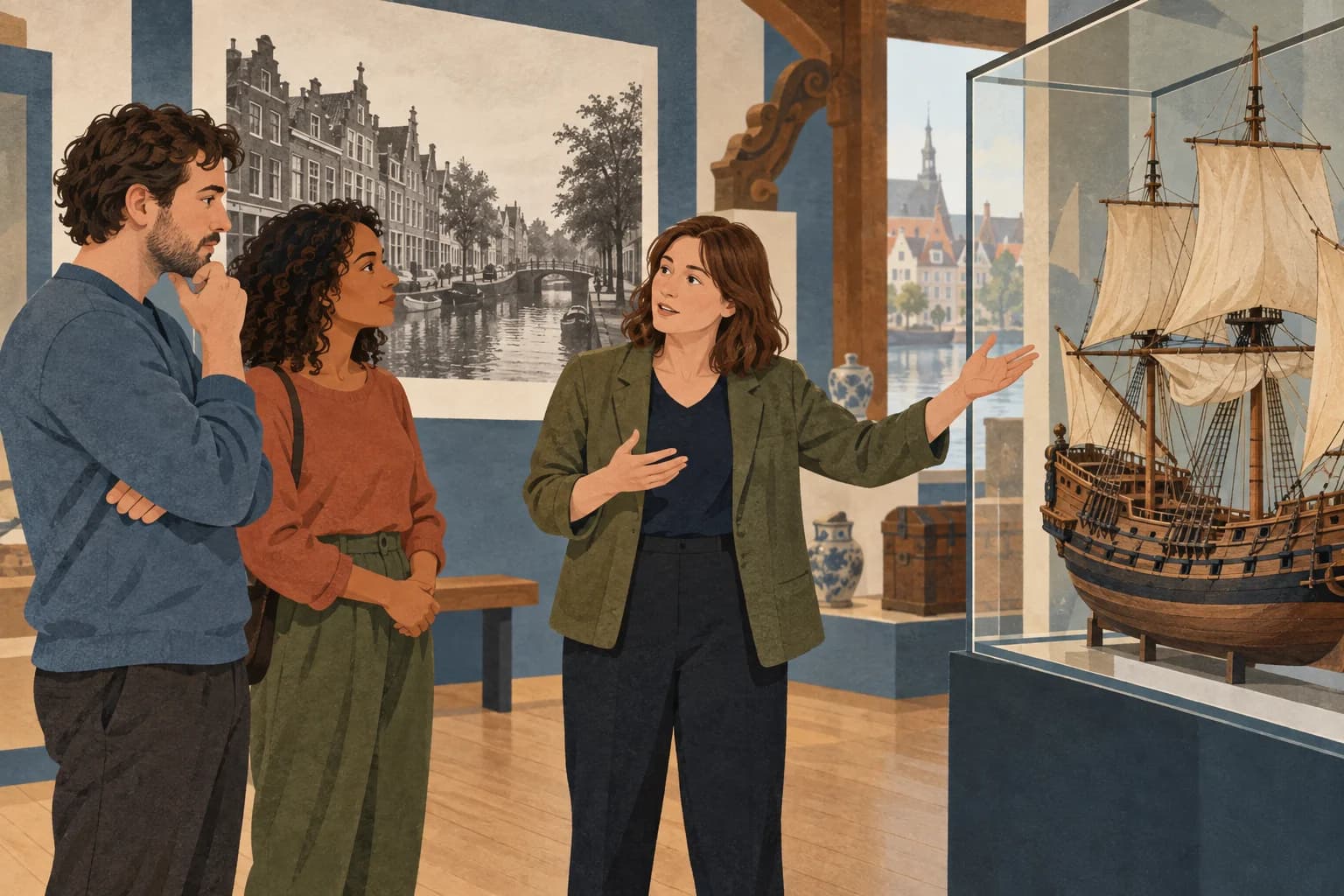
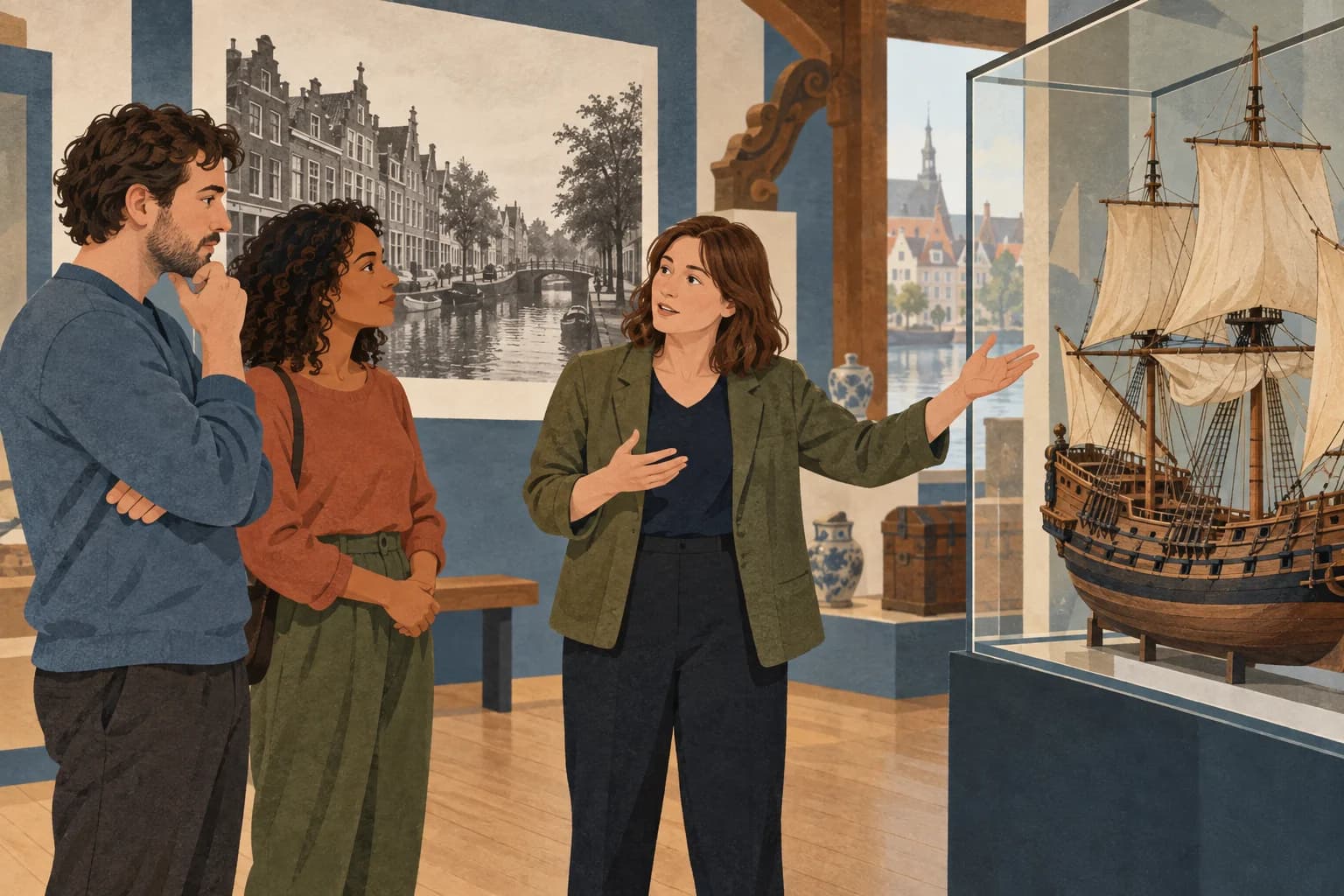
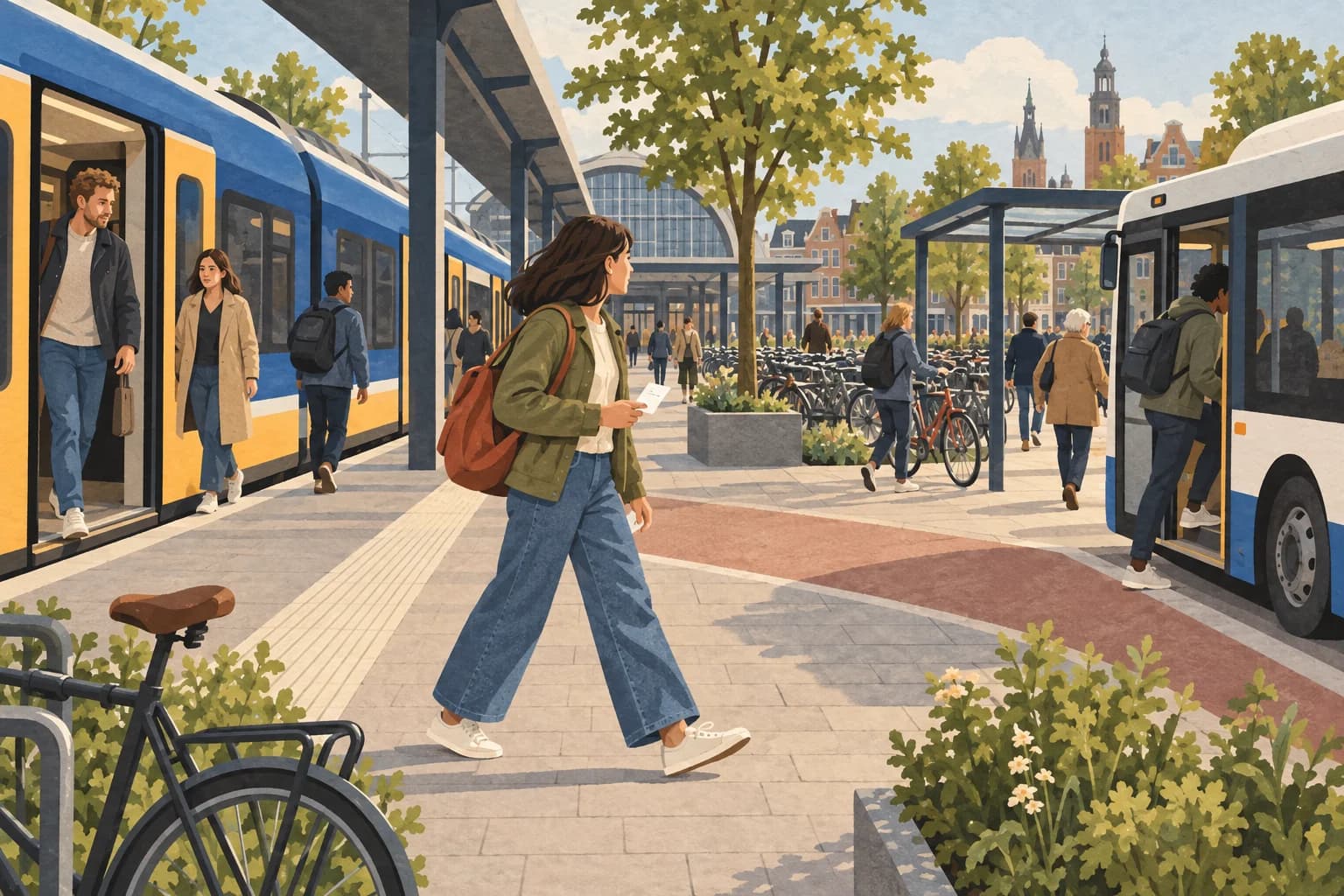
Nora leest over Nederland in de bibliotheek. Zij ziet dat Amsterdam de hoofdstad is. De regering werkt in Den Haag. Daarna zoekt Nora op een kaart waar haar eigen provincie ligt. Zij wil zaterdag met de trein naar Den Haag reizen. Zij bekijkt de vertrektijd en het juiste perron voordat zij vertrekt. In Den Haag bezoekt zij een tentoonstelling over de geschiedenis van Nederland.
Show translation
Nora reads about the Netherlands in the library. She sees that Amsterdam is the capital. The government works in The Hague. Nora then looks on a map for her own province. She wants to travel to The Hague by train on Saturday. She checks the departure time and the correct platform before leaving. In The Hague she visits an exhibition about Dutch history.
Try the questions
Question 1 of 3
Sources
Keep practising with current news
Use the words and reading skills from this lesson to understand current news from the Netherlands.
Browse news by topic