Democracy and the rule of law
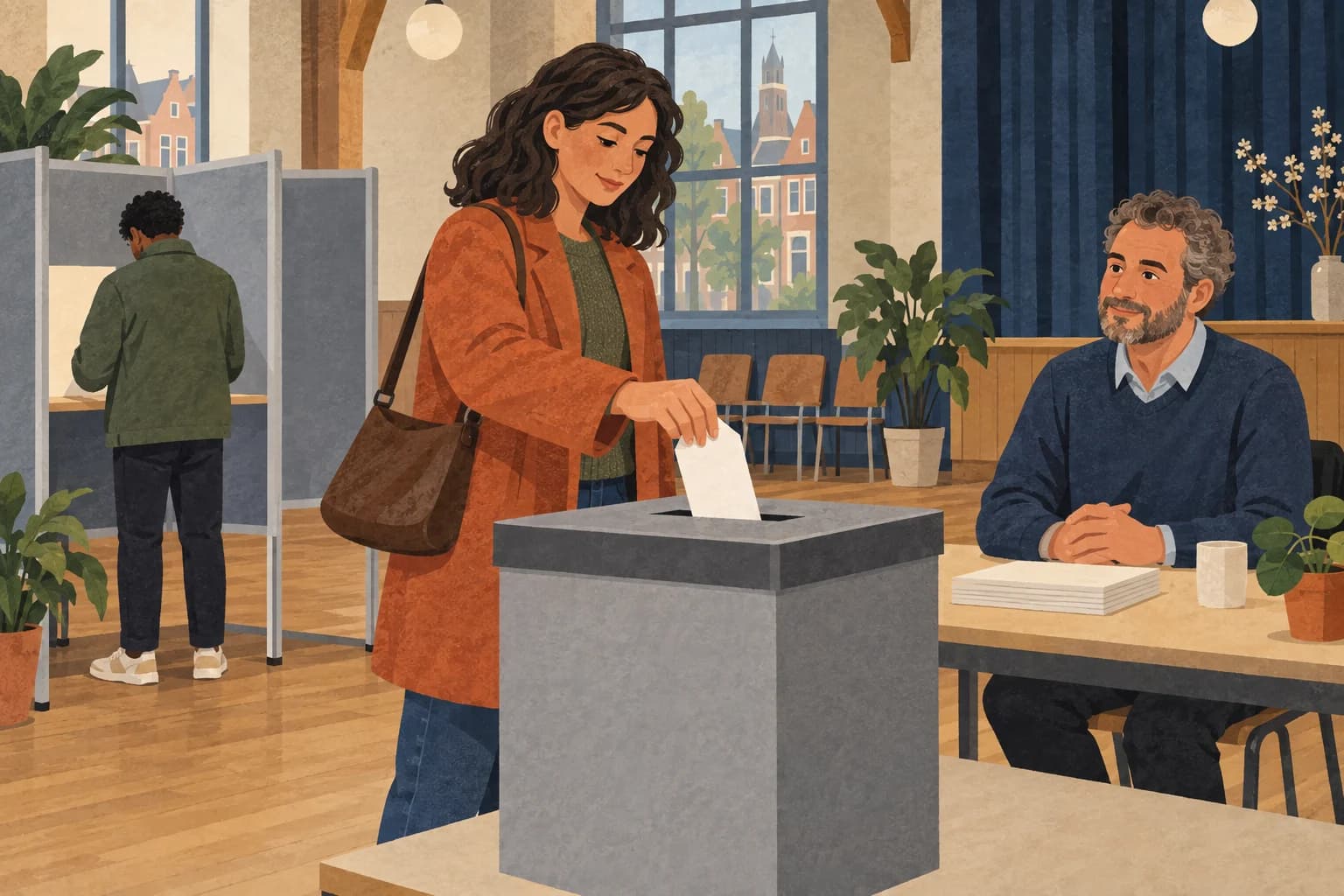
Leila attends a library lesson on Dutch democracy and asks how public institutions work.
Sources checked on
Beta version: the content and translations are still being reviewed. Check official sources before making decisions about your exam.

What you will learn
Parliament discusses laws and checks the government. The government carries out policy. Courts decide cases independently. Municipalities make many local decisions. The official KNM rights theme also covers equality, freedom of expression and religion, privacy, bodily autonomy and protection from discrimination and violence. This reading introduces institutions; the theme map below identifies the remaining areas.
Contents
Parliament, elections, the rule of law, fundamental rights and equal treatment.
What the official theme includes
The current KNM syllabus lists these areas. Open the chapters for an explanation of each knowledge point. The short story above is a reading warm-up; check DUO for current exam information and official practice questions.
7.1Understand how Dutch democratic institutions and elections work.
- 7.1.1
NederlandsNederland is een koninkrijk; de koning heeft vooral een formele rol. De democratische rechtsstaat heeft een parlement met Tweede en Eerste Kamer, meerdere politieke partijen en een regering met ministers. Parlement en regering maken wetten; de minister-president leidt de ministers. Rijk, provincies en gemeenten hebben elk eigen taken. Zoek de actuele namen van koning en minister-president op in officiële bronnen.
EnglishThe Netherlands is a kingdom; the monarch has mainly a formal role. Its democratic system has a parliament with a House of Representatives and a Senate, several political parties, and a government with ministers. Parliament and government make laws; the prime minister leads the ministers. National, provincial and municipal authorities each have their own tasks. Check official sources for the current names of the monarch and prime minister.
- 7.1.2
NederlandsNederland is lid van de Europese Unie en moet gezamenlijke afspraken naleven. De EU maakt onder voorwaarden vrij reizen, wonen, werken en handel tussen lidstaten mogelijk; burgers kunnen ook aan Europese verkiezingen deelnemen volgens de kiesregels.
EnglishThe Netherlands belongs to the European Union and must follow joint agreements. Subject to conditions, the EU allows people and goods to move freely between member states, and people to live, work and trade across borders. Eligible citizens can also vote in European elections.
- 7.1.3
NederlandsDe wetgevende, uitvoerende en rechterlijke macht hebben verschillende taken. Deze verdeling voorkomt dat alle macht op één plek ligt. Een rechterlijke uitspraak geldt, maar soms kun je volgens de regels in hoger beroep gaan.
EnglishThe legislative, executive and judicial branches have different tasks. This division prevents all power from resting in one place. A court judgment applies, but you may sometimes appeal under the rules.
- 7.1.4
NederlandsActief kiesrecht betekent stemmen; passief kiesrecht betekent je verkiesbaar stellen. Er zijn verkiezingen voor gemeente, provincie, Tweede Kamer, Europees Parlement en waterschap; ook referenda kennen eigen regels. Niet-Nederlanders kunnen onder voorwaarden aan gemeenteraadsverkiezingen deelnemen, soms na vijf jaar verblijf.
EnglishActive voting rights mean the right to vote; passive voting rights mean the right to stand for election. Elections are held for municipal and provincial councils, the House of Representatives, the European Parliament and water boards; referendums have their own rules. Non-Dutch residents may vote in municipal elections under certain conditions, sometimes after five years of residence.
- 7.1.1
7.2Know core legal rights and protections in the Netherlands.
- 7.2.1
NederlandsVrouwen en mannen zijn voor de wet gelijkwaardig. Zij moeten dezelfde kansen krijgen om zelfstandig keuzes te maken, bijvoorbeeld bij onderwijs en werk.
EnglishWomen and men have equal standing under the law. They should have the same opportunities to make independent choices, including in education and work.
- 7.2.2
NederlandsVrijheid van meningsuiting beschermt het uiten van ideeën. De wet stelt grenzen aan bepaalde uitingen, en woorden die wettelijk mogen kunnen voor anderen toch kwetsend zijn.
EnglishFreedom of expression protects the sharing of ideas. The law sets limits on certain expressions, and words that are legally allowed can still hurt others.
- 7.2.3
NederlandsIedereen mag een eigen geloof, levensbeschouwing of overtuiging kiezen. Religieuze groepen regelen hun eigen zaken zolang zij de wet volgen; de regels van de staat gaan voor op religieuze of traditionele regels als die botsen.
EnglishEveryone may choose their own religion, worldview or beliefs. Religious groups can manage their own affairs as long as they follow the law; state law takes priority if religious or traditional rules conflict with it.
- 7.2.4
NederlandsArtikel 1 van de Grondwet beschermt gelijke behandeling en verbiedt discriminatie op gronden zoals geloof, levensovertuiging, politieke overtuiging, ras, geslacht, handicap en seksuele gerichtheid, of op welke grond dan ook. Je kunt uitsluiting melden bij een meldpunt of de politie.
EnglishArticle 1 of the Dutch Constitution protects equal treatment and prohibits discrimination on grounds such as religion, belief, political opinion, race, sex, disability and sexual orientation, or on any other grounds. You can report exclusion to a reporting centre or the police.
- 7.2.5
NederlandsDe wet beschermt je privacy. Deel alleen persoonsgegevens die een organisatie voor haar taak nodig heeft. Je kunt gegevens die een organisatie over jou bewaart inzien en zo nodig laten verbeteren.
EnglishThe law protects your privacy. Share only the personal information an organisation needs for its task. You can view information an organisation holds about you and ask for it to be corrected when necessary.
- 7.2.6
NederlandsJe lichaam is wettelijk beschermd. Ongewenste seksuele handelingen en geweld, ook thuis of tegen kinderen, zijn verboden. Dat geldt ook voor geweld uit naam van eer en voor meisjesbesnijdenis.
EnglishThe law protects your body. Unwanted sexual acts and violence, including at home or against children, are prohibited. This also applies to violence committed in the name of honour and female genital mutilation.
- 7.2.7
NederlandsIn het Donorregister kun je vastleggen of je na je overlijden organen wilt doneren, niet wilt doneren of slechts voor bepaalde organen toestemming geeft. Kijk op de officiële site wat er gebeurt als je geen keuze invult.
EnglishIn the Donor Register, you can record whether you want to donate organs after death, do not want to donate, or consent only to certain organs. Check the official website to see what happens if you do not record a choice.
- 7.2.8
NederlandsVrouwen hebben in Nederland het recht om zelf keuzes te maken over hun leven en lichaam, bijvoorbeeld over opleiding, werk en relaties. Niemand anders mag die keuzes met dwang overnemen.
EnglishWomen in the Netherlands have the right to make their own choices about their lives and bodies, including education, work and relationships. No one else may take those choices away by force.
- 7.2.1
Read in Dutch
In de bibliotheek volgt Leila een les over de Nederlandse democratie. Zij leert dat het parlement wetten bespreekt en controleert wat de regering doet. De regering voert beleid uit. Een rechter beoordeelt een zaak onafhankelijk. Leila stelt een vraag over de gemeente. De docent legt uit dat de gemeente besluiten neemt over veel lokale zaken. Leila zoekt daarna meer informatie op een officiële website.
Show translation
At the library, Leila attends a lesson on Dutch democracy. She learns that parliament discusses laws and checks what the government does. The government carries out policy. A judge assesses a case independently. Leila asks a question about the municipality. The teacher explains that the municipality makes decisions about many local matters. Leila then looks for more information on an official website.
Try the questions
Question 1 of 3
Sources
Keep practising with current news
Use the words and reading skills from this lesson to understand current news from the Netherlands.
Browse news by topic