School and parents
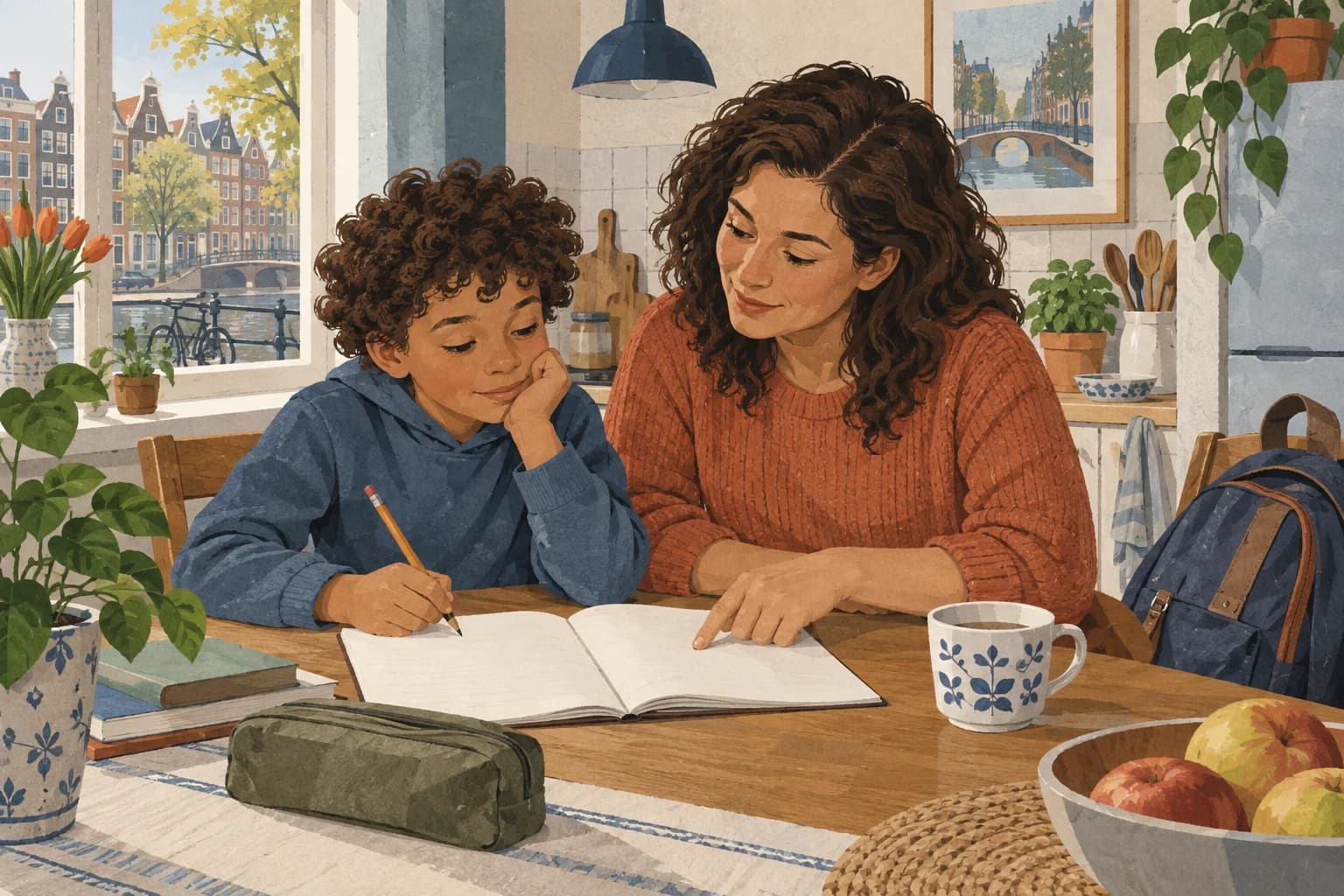
Youssef is looking for a primary school for his daughter. Read how he visits a school and asks questions.
Sources checked on
Beta version: the content and translations are still being reviewed. Check official sources before making decisions about your exam.

What you will learn
In the Netherlands, children may start primary school at age four. Parents can visit nearby schools and ask how they communicate with families. An acknowledgment of an application only confirms that the school received it; it is not an offer of a place. Some schools have waiting lists. Check the school’s current admission information before applying.
Contents
School pathways, parents’ roles, education costs and financial support.


What the official theme includes
The current KNM syllabus lists these areas. Open the chapters for an explanation of each knowledge point. The short story above is a reading warm-up; check DUO for current exam information and official practice questions.
8.1Use the education system for yourself or your children.
- 8.1.1
NederlandsVoor kinderen onder vier jaar bestaat ontwikkelingsgericht aanbod. Vanaf vier jaar zijn er verschillende schoolroutes, met ook ondersteuning voor leerlingen die extra hulp nodig hebben. Bij een volgende opleiding kunnen toelatingseisen gelden; zoek informatie over routes voor kinderen, jongeren en volwassenen.
EnglishDevelopmental programmes are available for children under four. From age four, there are different school routes, including support for pupils who need extra help. Later programmes may have admission requirements; look up the options for children, young people and adults.
- 8.1.2
NederlandsDoor vrijheid van onderwijs bestaan er openbare scholen en bijzondere scholen met een eigen levensbeschouwing of onderwijsvisie. Vergelijk scholen en hun toelatingsinformatie.
EnglishFreedom of education means there are public schools and schools based on a particular religion, worldview or educational approach. Compare schools and their admission information.
- 8.1.3
NederlandsKinderen kunnen vanaf vier jaar naar school. Van vijf tot zestien geldt leerplicht; daarna geldt tot achttien jaar een kwalificatieplicht als nog geen startkwalificatie is behaald. Volg de vastgestelde schoolvakanties en vraag bij twijfel informatie aan school of gemeente.
EnglishChildren can start school at four. School attendance is compulsory from five to sixteen; from then until eighteen, a qualification requirement applies if a child has not yet earned a basic qualification. Follow the school's set holiday dates, and ask the school or municipality if you are unsure.
- 8.1.4
NederlandsVoor jonge kinderen zijn er voorschoolse educatie en kinderopvang; na schooltijd bestaat buitenschoolse opvang. Vraag bij gemeente of opvangorganisatie naar het aanbod en de kosten of vergoedingen.
EnglishEarly education and childcare are available for young children; after-school care is available after classes. Ask your municipality or childcare provider about local options, costs and possible allowances.
- 8.1.5
NederlandsBasisscholen en middelbare scholen moeten in hun lessen aandacht besteden aan seksualiteit en seksuele diversiteit. Vraag de school hoe zij dit onderwijs vormgeeft.
EnglishPrimary and secondary schools must include sexuality and sexual diversity in their lessons. Ask the school how it teaches these subjects.
- 8.1.1
8.2Understand parental responsibilities for children and school involvement.
- 8.2.1
NederlandsOuders hebben wettelijke verantwoordelijkheid voor hun kinderen. Bij schade die een kind onder zestien veroorzaakt, kunnen ouders volgens de regels aansprakelijk zijn; de precieze beoordeling hangt van de leeftijd en situatie af.
EnglishParents have legal responsibilities for their children. Parents can be liable under the rules for damage caused by a child under sixteen; the exact assessment depends on the child's age and the circumstances.
- 8.2.2
NederlandsScholen bespreken de ontwikkeling van een kind met ouders, bijvoorbeeld tijdens oudergesprekken. Ouders kunnen daarnaast vrijwillig helpen bij schoolactiviteiten.
EnglishSchools discuss a child's development with parents, for example at parent-teacher meetings. Parents may also volunteer to help with school activities.
- 8.2.3
NederlandsBij vragen over opvoeding of problemen thuis of op school kun je hulp vragen aan school, huisarts, gemeente of jeugdhulp. Kinderbescherming kan bij ernstige zorgen ingrijpen en zo nodig een rechter betrekken.
EnglishFor parenting questions or problems at home or school, you can ask the school, GP, municipality or youth support service for help. Child protection services can intervene when there are serious concerns and involve a judge if needed.
- 8.2.1
8.3Understand school costs and available financial support.
- 8.3.1
NederlandsOnderwijs kan kosten meebrengen, bijvoorbeeld lesgeld, boeken, reizen of een vrijwillige ouderbijdrage. Vraag welke kosten echt verplicht zijn voordat je betaalt.
EnglishEducation can bring costs, such as tuition, books, travel or a voluntary parent contribution. Ask which costs are truly compulsory before paying.
- 8.3.2
NederlandsVoor school, studie, zorg of opvang bestaan soms vergoedingen. Zoek uit welke regeling voor jouw situatie geldt; bij school kun je ook vragen naar vermindering of kwijtschelding van bepaalde kosten.
EnglishFinancial support may be available for school, study, healthcare or childcare. Find out which scheme applies to you; you can also ask the school to reduce or waive certain costs.
- 8.3.3
NederlandsBij DUO kun je nagaan of je recht hebt op studiefinanciering of een andere tegemoetkoming voor studiekosten en hoe je die aanvraagt.
EnglishDUO can tell you whether you qualify for student finance or another contribution towards study costs and how to apply.
- 8.3.1
Read in Dutch
Youssef zoekt een basisschool voor zijn dochter Lina. Hij bekijkt scholen in de buurt en maakt een afspraak voor een bezoek. Hij praat met een medewerker over het dagprogramma. Ook vraagt hij hoe de school ouders informeert. Daarna kiest hij een school en meldt Lina daar aan. De school bevestigt dat zij de aanmelding heeft ontvangen. Dit betekent nog niet dat Lina een plek heeft. Er kan een wachtlijst zijn. Youssef bewaart het bericht.
Show translation
Youssef is looking for a primary school for his daughter Lina. He looks at schools nearby and makes an appointment to visit. He talks to a staff member about the daily programme and asks how the school keeps parents informed. Then he chooses a school and applies for Lina. The school confirms that it received the application. This does not yet mean Lina has a place. There may be a waiting list. Youssef keeps the message.
Try the questions
Question 1 of 3
Sources
Keep practising with current news
Use the words and reading skills from this lesson to understand current news from the Netherlands.
Browse news by topic